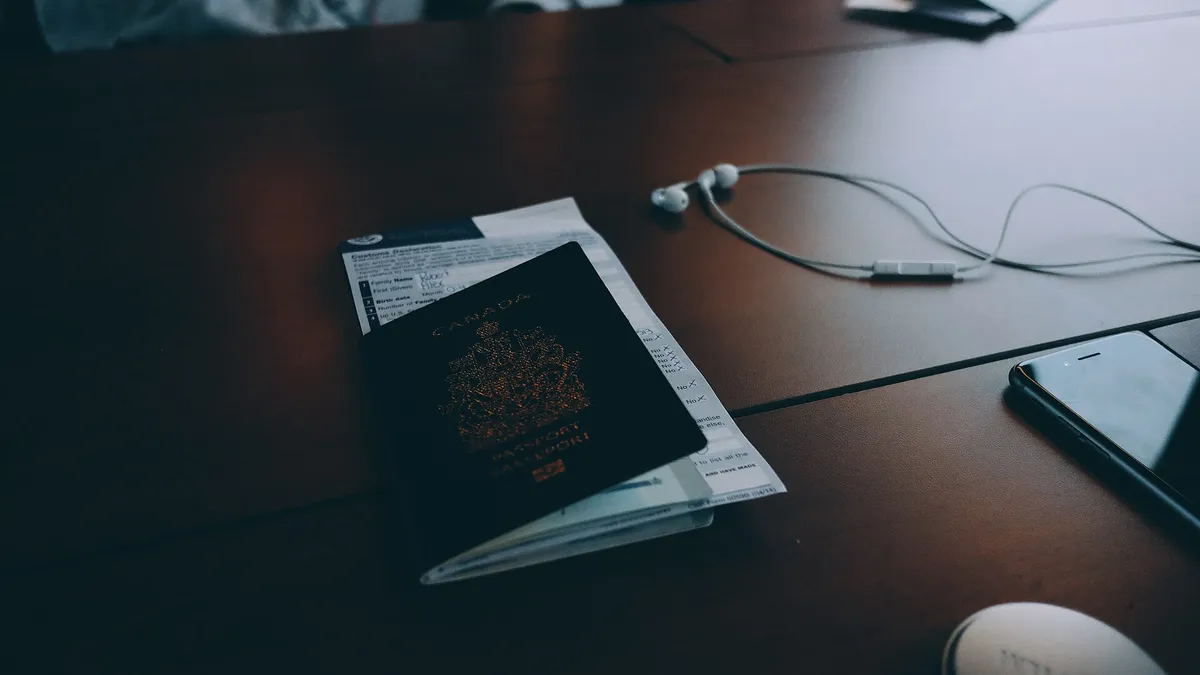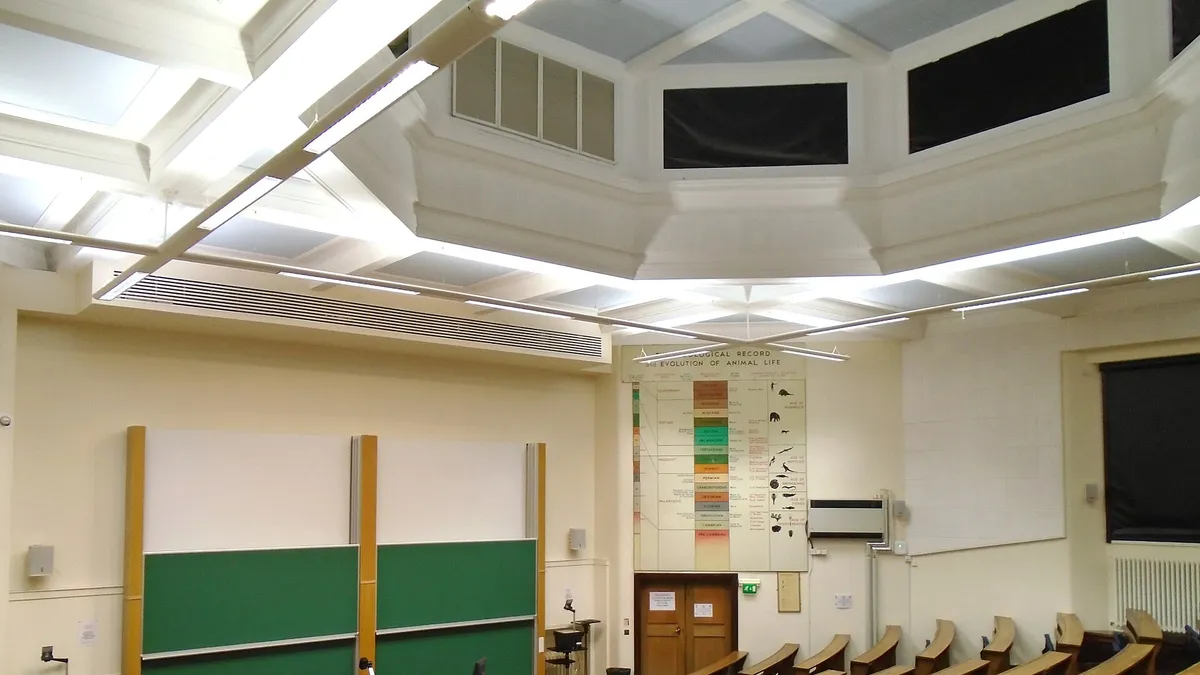
On IELTS test day you arrive 30 to 45 minutes early with the passport you registered with, store everything else in a locker, and sit Listening, Reading and Writing back to back for about two hours and forty-five minutes. Speaking is a separate 11 to 14 minute interview, often on a different day. Nothing enters the room except your ID and clear water. Results arrive in three to five days for computer tests and about thirteen days for paper.
Langujet AI
Practice IELTS Writing with instant AI feedback
Submit real essays. Get band score estimates, structure analysis, and grammar corrections in seconds.
Timeline of the day
- Arrival (30–45 minutes before): check-in, identity verification against your passport, a photograph and sometimes a finger scan. Late arrivals are not admitted.
- Lockers: phone, watch, bag, wallet, keys and any notes go into a locker or a sealed bag. Your phone must be switched off, not silent.
- Seating: you are shown to a numbered desk. On paper tests, pencils and an eraser are on the desk; on computer tests, you get a headset, a pencil and scrap paper for notes.
- Listening (30 minutes + transfer time): four parts, twenty questions each in pairs. Paper tests give ten minutes to transfer answers; computer tests give two minutes to check.
- Reading (60 minutes): three passages, forty questions, no transfer time, so write answers directly on the answer sheet.
- Writing (60 minutes): Task 1 and Task 2 in whichever order you choose. Most candidates do Task 2 first because it carries two thirds of the marks.
- Speaking (11–14 minutes): the same day in the afternoon, or on a date up to a week either side. Your confirmation states which.
There is no scheduled break between Listening, Reading and Writing. You may ask to visit the toilet, but the clock does not stop.
What to bring and what is banned
Bring the passport or ID document you used to register, nothing else is required. A bottle of water is allowed if the label is removed. Many centres provide pencils; bringing two sharpened pencils and an eraser is sensible for paper tests. Everything else is banned from the room: phones, smartwatches, fitness trackers, earphones, dictionaries, notes, food, and in most centres bags of any kind. Being found with a phone, even switched off, in your pocket means your test is void and the fee is lost. Check your pockets twice at the locker.
Wear layers. Test rooms are often air-conditioned to the point of being cold, and you cannot leave to fetch a jacket. Eat before you arrive; with no break, the Writing test starts about two hours after check-in and concentration drops noticeably on an empty stomach. Glasses are fine, but cases stay in the locker.
Speaking on a different day
Candidates are often unsettled to find the Speaking test scheduled on a different day, sometimes before the written test. This is normal and has no effect on scoring. Treat it as a separate appointment: arrive early with the same ID, expect a short wait, and know that the examiner records the interview. The test has three parts: introduction and familiar topics (four to five minutes), a cue card talk with one minute of preparation (three to four minutes), and a discussion of abstract questions linked to the cue card (four to five minutes). Our guides to IELTS Speaking Part 1 and Part 2 cue cards cover what to expect in each.
Common day-of mistakes
- Reading the Listening questions too late. Use every pause in the recording to read ahead; the first question of each part is often lost by candidates still reading the instructions.
- Writing answers in the question booklet during Reading. There is no transfer time. Write on the answer sheet from the first question.
- Spending 30 minutes on Task 1. Task 1 is worth one third of Writing. Twenty minutes is the limit; set it by the room clock.
- Not writing the word count mentally. Under 150 words for Task 1 or 250 for Task 2 is penalised. Know how many words fill one of your handwritten lines.
- Asking the Speaking examiner to repeat in Part 2. You can ask for clarification in Parts 1 and 3, but in Part 2 the card is all you get. Use the minute of preparation.
- Changing answers in the last minute of Listening. Your first instinct is right more often than your second guess, unless you have identified a specific reason.
Results timeline
Computer-delivered results are released online three to five days after the test; paper results after about thirteen days. The Test Report Form is available for download and can be sent electronically to up to five institutions free of charge. If a score looks wrong, you can request an Enquiry on Results (a remark) within six weeks; the fee is refunded if any band changes. Remarks of Writing and Speaking change scores more often than remarks of Reading and Listening, which are machine-checked. Decide quickly: a remark takes two to twenty-one days, and a deadline will not wait for it.
Practise under exam timing
Most day-of mistakes are timing mistakes, and they only show up under real conditions. Take a full IELTS mock test in one sitting, with no breaks and the room clock as your only timer, at least once before the real day. For the interview, the IELTS Speaking practice tests run all three parts with the real timings. If you have not booked yet, our guide on how to register for IELTS and what it costs covers dates, fees and the rescheduling rules.
Frequently asked questions
Langujet AI
Ready to hit Band 7+?
Practise IELTS Writing and Speaking with Langujet. AI feedback that actually teaches — not just corrects.
Free to start · No credit card required