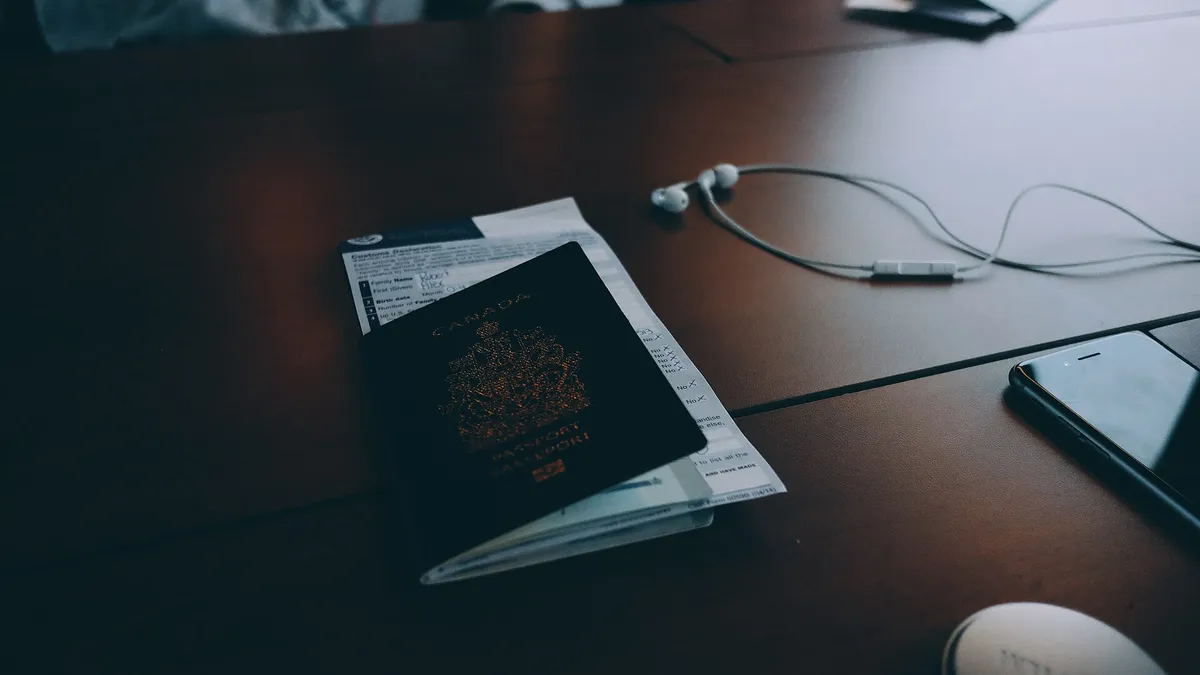
How to register for IELTS: choose the test type (Academic or General Training), pick paper or computer, find a date on the IDP or British Council website for your country, create an account, upload your passport, pay, and keep the confirmation email. Both organisations deliver the identical test. Fees vary by country and as of October 2026 mostly fall between USD 200 and 300; always check the official site for the current amount in your location.
Langujet AI
Practice IELTS Writing with instant AI feedback
Submit real essays. Get band score estimates, structure analysis, and grammar corrections in seconds.
IDP vs British Council: the same test
IELTS is owned jointly by IDP, the British Council and Cambridge. In most countries you can register through either IDP or the British Council, and candidates often ask which is easier. The answer is neither: the papers, examiners' training, marking criteria and results are identical. The practical differences are venue, available dates and sometimes price. Choose by location and date, and if both are available on your date, by whichever test centre has better reviews for organisation and equipment.
One practical difference is worth knowing. Each provider runs its own booking system, so if the date you want shows as full on one site, check the other; the same city often has two test centres with different availability. Registration takes about fifteen minutes online, and you do not need to have decided on a university or visa route before you book, only on the module.
Some countries have only one provider. India, for example, is served by IDP; in many European countries both operate. The official IELTS website lists every centre, so start there rather than with a search engine, which will show you preparation companies first.
Step-by-step registration
- Decide the test type. Academic for university admission and professional registration; General Training for migration and some work visas. The Listening and Speaking papers are the same; Reading and Writing differ. Check the exact requirement with the institution or immigration authority first, because booking the wrong module means paying again.
- Choose paper or computer. Same content and same scoring. Computer-delivered IELTS has more dates, results in three to five days and typing instead of handwriting; paper results take about thirteen days.
- Find a date. Search by city on the IDP or British Council site. Popular centres fill four to six weeks ahead, especially before university application deadlines.
- Create an account and upload ID. The passport you upload must be the one you bring on test day. Check that the name matches exactly.
- Pay. Card payment is standard; some centres accept bank transfer. Keep the receipt.
- Confirm the Speaking slot. Speaking is often on a different day, up to a week before or after. The confirmation email states both appointments; read it twice.
Fees by region, as of October 2026
Fees are set per country and change, so the ranges below are indicative. Confirm the figure on the official IELTS site for your country before you budget.
| Region | Typical fee range | Notes |
|---|---|---|
| United Kingdom | GBP 200–230 | IELTS for UKVI costs slightly more than standard IELTS |
| United States and Canada | USD 250–320 / CAD 320–360 | Computer dates usually more frequent in large cities |
| Australia | AUD 400–430 | Fees often increase at the start of the calendar year |
| India | INR 17,000–18,500 | Single provider (IDP) |
| Middle East | USD 250–330 equivalent | Varies widely between Gulf states |
| South and Southeast Asia | USD 190–260 equivalent | Among the lowest fees globally |
| Europe (excluding UK) | EUR 220–260 | Both providers in most countries |
If the fee matters to your decision, it is worth noting that a second attempt costs the same as the first. Preparing well enough to need only one sitting is the biggest saving available.
Paper vs computer dates
Paper IELTS runs on fixed dates, typically three or four per month, and the Speaking test for paper candidates is more likely to fall on a separate day. Computer-delivered IELTS runs most days in larger cities, with morning and afternoon sessions. If your deadline is close, computer is almost always the faster route to a result. If you write faster by hand than you type, or you find reading long passages on screen tiring, paper may suit you better; both are equally valid for every institution that accepts IELTS.
Rescheduling and cancellation
Rules depend on the provider and country, but the usual pattern is: cancel or transfer more than five weeks before the test date and you receive a refund minus an administration fee, or a free transfer. Inside five weeks, no refund and no transfer unless you can document serious illness or bereavement, in which case a partial refund may be offered. Centres apply these rules strictly, so do not book a date "to be safe" and plan to move it. Book the date you will actually sit. If you are unsure whether you are ready, the answer is a mock test, not a provisional booking.
One more rule that catches people: the name on the booking must match the passport exactly, including middle names. A mismatch discovered at check-in means you are refused entry and the fee is lost, and it cannot be corrected on the day. Check the confirmation email against the passport the moment it arrives.
Practise free before you pay
Before spending the fee, find out whether you are ready. A full IELTS mock test gives a band estimate for all four skills and tells you whether to book now or in two months. Check what your destination actually requires on the IELTS requirements by country page, then read our IELTS test day guide so the day itself holds no surprises.
Frequently asked questions
Langujet AI
Ready to hit Band 7+?
Practise IELTS Writing and Speaking with Langujet. AI feedback that actually teaches — not just corrects.
Free to start · No credit card required